
Refusing the Breathalyzer in Michigan: What Implied Consent Costs Your License

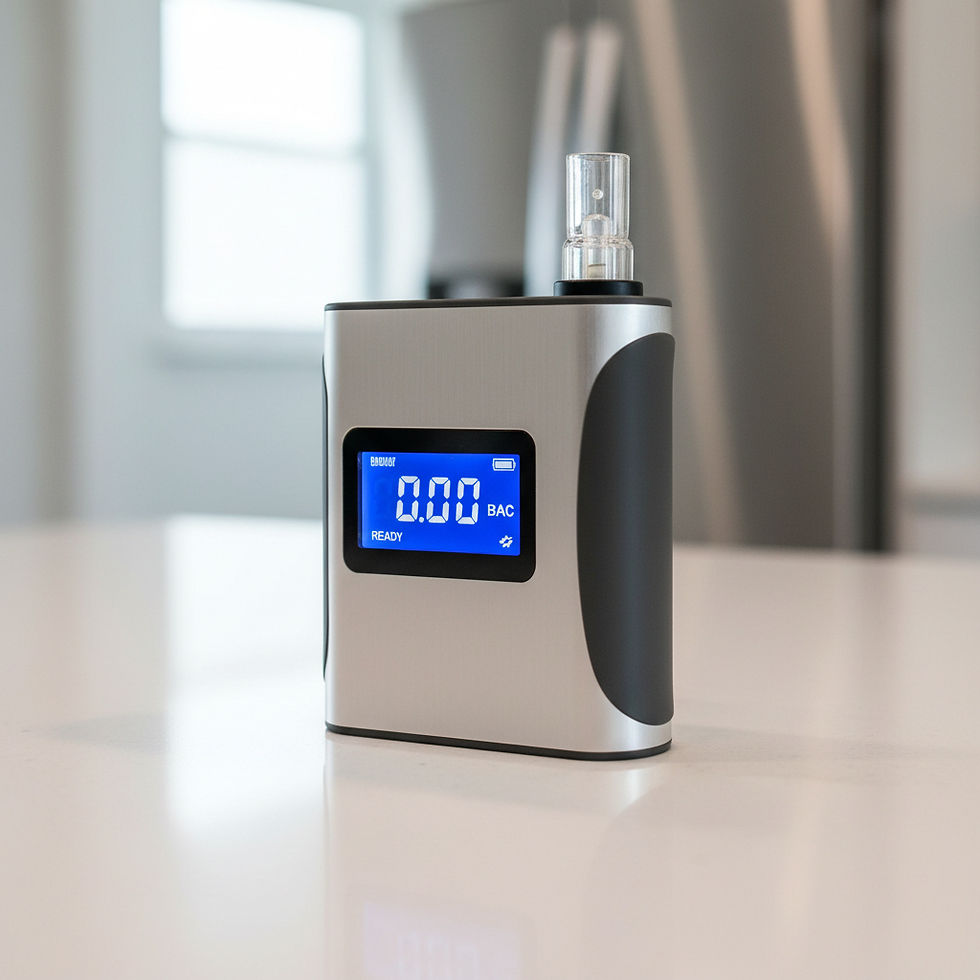
Clients call our office a week after an OWI arrest worried about the criminal charge, and then a notice arrives from the Secretary of State suspending their license for a year. No trial. No conviction. That suspension is not part of the criminal case. It comes from refusing the chemical test at the station, and it runs on its own track, with its own deadline.
The roadside test and the station test are not the same test
People say “breathalyzer” for both. Michigan law does not.
The handheld device offered at the roadside is a preliminary chemical breath analysis, or PBT. For a driver not operating a commercial vehicle, refusing a PBT is a civil infraction under MCL 257.625a(2)(d) — a ticket, not an implied consent refusal. Two caveats: MCL 257.320a assesses two points against a driver under 21 who refuses a PBT, and under MCL 257.625a(5) refusal is a misdemeanor for a commercial vehicle operator.
The test that carries the license consequence is the evidentiary chemical test — breath, blood, or urine — that an officer requests after an arrest. Under MCL 257.625c(1), a person who operates a vehicle on a Michigan highway or other place open to the public is deemed to have consented to it when arrested for one of the drunk- or drugged-driving offenses the statute lists. Refusing that test triggers implied consent sanctions.
What a refusal costs
If you do not request a hearing, MCL 257.625f(1) directs the Secretary of State to impose the sanctions; if you request one and lose, MCL 257.625f(7) applies the same ones. For an operator’s or chauffeur’s license that is one year on a first refusal and two years on a second or subsequent refusal within seven years, plus six points under MCL 257.320a(8).
There is no restricted license at the branch office during that suspension; the only route runs through the circuit court under MCL 257.323c.
Commercial drivers face a separate layer, and the details matter. If the refusal happened
while operating a commercial motor vehicle, MCL 257.625f(1)(b) and (c) suspend all vehicle group designations for one year on a first refusal and revoke them for at least ten years on a second refusal in a separate incident within ten years. A CDL holder who refuses while driving his own car is sanctioned under MCL 257.625f(1)(a) instead.
A Michigan outcome does not resolve the federal side. Under 49 CFR 383.51, refusing a test required by a state’s implied consent law disqualifies a CDL holder for one year — three years for a first offense while operating a commercial vehicle carrying placarded hazardous materials — and for life on a second qualifying offense, subject to the reinstatement provision in 49 CFR 383.51(a)(6). That is a separate federal analysis, and a Michigan court cannot fix it: MCL 257.323c(4) bars a court from ordering a restricted license to operate any commercial motor vehicle requiring a group designation. If you hold a CDL, say so to your lawyer first.
Refusing does not stop the sample from being taken
Refusing is not a way to keep the evidence out. MCL 257.625d(1) says that when a person refuses, a test “shall not be given without a court order, but the officer may seek to obtain the court order.” The advisory read before the request, in MCL 257.625a(6)(b), says the same thing in advance. A refusal can therefore end with the sample taken anyway under a court order, and a year-long suspension on top of the OWI case. The refusal itself is admissible in the criminal case only to show a test was offered, not as evidence of guilt. MCL 257.625a(9).
You have 14 days, and the clock is already running
Under MCL 257.625e, the officer must notify you in writing that you may request a hearing within 14 days of the date of that notice, and that failing to request one will suspend your license.
The request goes to the Secretary of State’s Office of Hearings and Administrative Oversight, on the Request for Hearing form that accompanies the officer’s report of refusal (the DI-93), online or by mail to Lansing. Read that form’s instructions closely — the current version measures the fourteen days from receipt of the officer’s report and requires an original signature.
Missing the date does not end everything, but it forfeits the hearing and the challenge to the refusal itself. In the meantime the officer confiscates your license and issues a temporary permit. MCL 257.625g.
The hearing covers four things — and only four
An implied consent hearing is a civil administrative proceeding, not a small OWI trial. Under MCL 257.625f(4) the hearing officer decides only whether:
the officer had reasonable grounds to believe you committed one of the listed offenses;
you were placed under arrest for such an offense;
you refused, and whether that refusal was reasonable; and
you were advised of the rights under MCL 257.625a(6).
Nothing else is within its scope — not your job, your commute, your record, or whether the OWI charge was later dismissed. The hearing is to be scheduled within 45 days of arrest and finally adjudicated within 77 days. MCL 257.625f(2), (3).
If it does not go your way, MCL 257.323(1) allows a petition for review in the circuit court for the county of arrest, filed within 63 days of the determination (182 days for good cause). On a first violation under section 625f, MCL 257.323(3) lets the court take testimony, examine the facts and circumstances, and affirm, modify, or set aside the suspension — the route to a restricted license, listed on SCAO form CC 297 as “First implied consent suspension (MCL 257.625f).” Otherwise review under MCL 257.323(4) is confined to the hearing record.
A restricted license is not automatic even there. MCL 257.323c bars one where a 625f suspension was imposed in the preceding seven years or the driver ran up more than 24 points in the prior two years, and requires a finding that no other transportation is available.
What this means for you
If you refused a chemical test after an OWI arrest in Kent County or elsewhere in Michigan:
Put the 14-day date on your calendar today and request the hearing, even if you have decided nothing else. It is the one chance to contest the refusal itself.
Treat the license case and the criminal case as separate problems. Beating the OWI does not undo the refusal suspension.
Do not assume a restricted license. It comes only from a circuit court, only on a first suspension, and only if you clear the MCL 257.323c conditions.
If you hold a CDL, get advice immediately, and about the federal disqualification in particular.
Write down what you remember now: which officers were there, whether anyone wore a body camera, whether anything was read to you from a card, and what you were told.
Talk to a lawyer before the deadline
Scozzari Law, PLLC handles OWI and implied consent matters for clients in Grand Rapids, Kent County, and across West Michigan. If you received a notice of suspension for refusing a chemical test, call our office to talk through your situation and your options — the 14-day window is short, and the request has to be filed inside it. Contact us today at (616) 226-4343, or james.scozzari@scozzarilaw.com to talk more.
This article is general information about Michigan law and is not legal advice. Reading it does not create an attorney-client relationship with Scozzari Law, PLLC. Michigan law changes, and how it applies depends entirely on the facts of your case. If you have a family law or criminal matter in Kent County or elsewhere in Michigan, talk to a lawyer about your specific situation.


Comments